Yoga for Stress and Anxiety: Simple Asanas to Calm the Mind
In the modern world, the mind often behaves like a restless force, pulled in many directions at once. Stress, anxiety, and nervous exhaustion have become common experiences, not because life is inherently unbearable, but because the mind and breath have lost their natural rhythm. When the breath becomes irregular, the mind follows. When the breath becomes steady, the mind settles.
Yoga for stress and anxiety offers a timeless and practical solution. It is not merely a form of physical exercise, but a complete system for harmonizing the body, nervous system, and mind. Through conscious movement, controlled breathing, and deep relaxation, Yoga helps restore balance, prevent mental fatigue, and cultivate inner stability.
This guide explores stress and anxiety from both Yogic and Ayurvedic perspectives and presents specific postures, breathing practices, and lifestyle methods that calm the nervous system and support mental well-being.
Understanding Stress and Anxiety Through Yoga and Ayurveda
The Restless Mind and Mental Fluctuations
Yoga describes stress as a state where the mind is continuously disturbed by uncontrolled mental fluctuations. These disturbances arise from fear, overthinking, sensory overload, and unresolved emotional tension. When the mind becomes agitated, the body reflects this agitation through shallow breathing, muscular tension, restlessness, and fatigue.
Unsteady breathing is one of the earliest physical signs of mental disturbance. By consciously regulating the breath, the nervous system receives signals of safety, allowing the mind to slow down and regain clarity. For a deeper understanding of how stress impacts the body biologically, Harvard Health provides an excellent overview of the stress response.
Anxiety as a Vata Imbalance
Ayurveda explains anxiety primarily as an imbalance of Vata Dosha, the principle governing movement and nerve impulses. When Vata becomes excessive, thoughts move too quickly, sleep becomes disturbed, and the body feels ungrounded.
Mental imbalance is also influenced by the three qualities of the mind:
- Sattva: associated with calmness, clarity, and balance.
- Rajas: associated with restlessness, agitation, and overactivity.
- Tamas: associated with heaviness, dullness, and inertia.
Anxiety reflects heightened Rajas combined with aggravated Vata. Yoga for stress and anxiety aims to reduce excess Rajas and restore Sattva, allowing the mind to become steady and reflective rather than reactive.
The Role of the Nervous System
The nervous system is highly sensitive to emotional strain. Prolonged stress disrupts nerve function, limiting the free flow of vital energy throughout the body. Yoga postures release physical tension, while breathing practices cleanse internal channels, allowing energy to move smoothly.
Savasana: The Art of True Relaxation
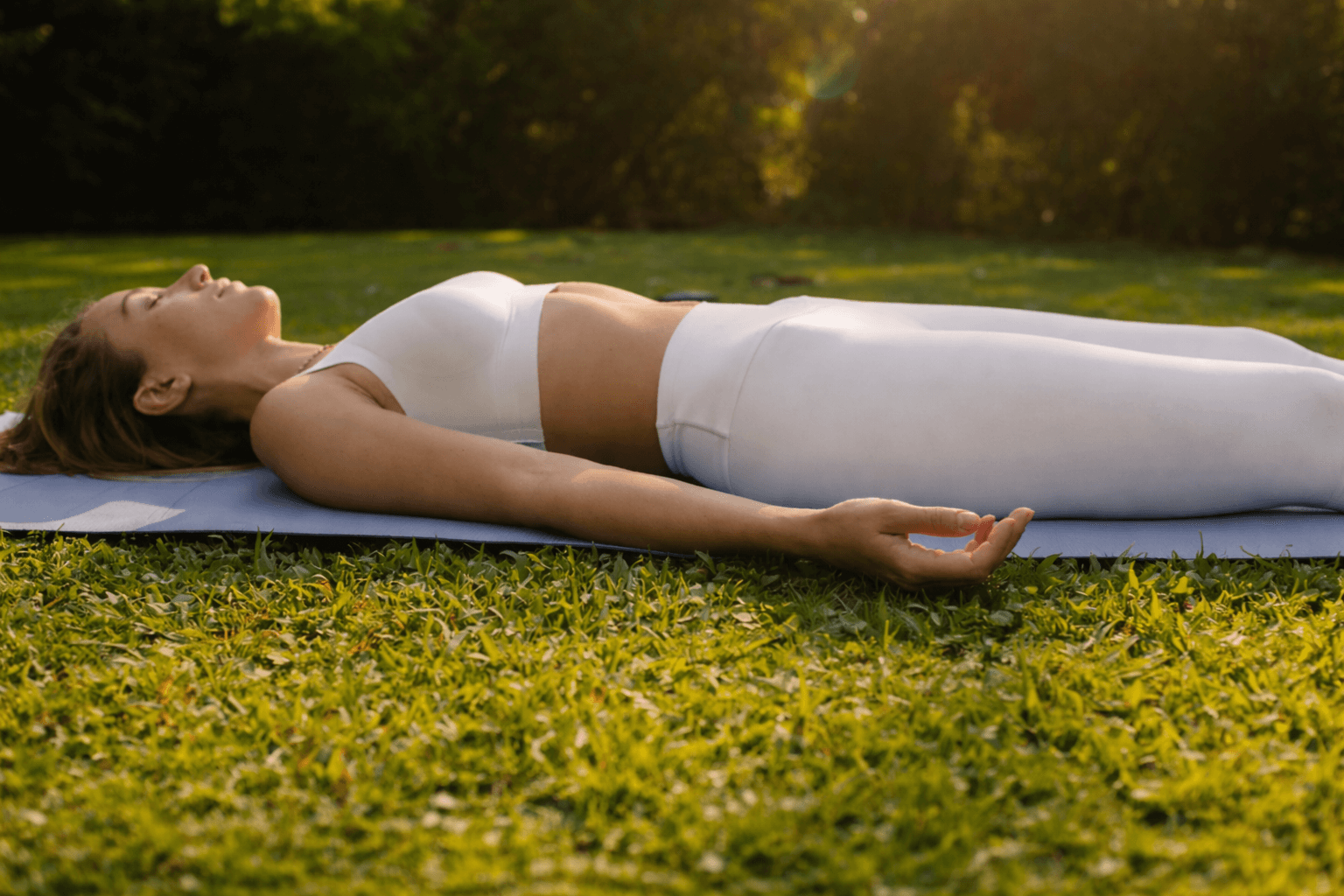
Relaxation is often misunderstood. True relaxation is not unconscious collapse or distraction, but conscious stillness. Savasana, or Corpse Pose, is one of the most powerful practices for relieving stress when performed correctly.
Purpose of Savasana
Savasana allows the nervous system to reset. By consciously relaxing every part of the body while remaining mentally aware, energy consumption decreases and recovery increases. It reduces fear, restlessness, and mental fatigue while cultivating a sense of safety and ease.
Technique for Savasana
- Lie flat on the back with the spine aligned.
- Allow the legs to relax outward evenly.
- Keep the head centered, neither tilted forward nor backward.
- Close the eyes gently and turn awareness inward.
- Relax the face, jaw, tongue, and eyes.
- Allow breathing to become slow, fine, and effortless.
- Let the mind remain passive, observing the breath.
Remain in this posture for 15 to 20 minutes. With regular practice, Savasana becomes a deeply restorative experience rather than mere physical rest. If you struggle to find mental quiet due to deep-seated emotional pain, professional guidance from Vaishalya Healing counseling services can help create the emotional safety needed for true relaxation.
Calming Asanas for Stress and Anxiety
An agitated body cannot relax fully. Specific Yoga postures help quiet the nervous system by reducing physical tension and stabilizing circulation.
Forward Bends: Cooling the Brain
Uttanasana (Standing Forward Bend)
This posture slows the heart rate, rests the brain, and soothes the nerves. It is particularly helpful for people who feel mentally overstimulated or emotionally reactive.
Paschimottanasana (Seated Forward Bend)
This posture stretches the spine, massages internal organs, and promotes mental quietness. It is especially useful for anxiety linked with digestive disturbance.
Janu Sirsasana (Head-to-Knee Pose)
This gentle forward bend supports digestion, relieves back tension, and encourages calm focus.
Inversions: Restoring Emotional Stability
Salamba Sarvangasana (Shoulder Stand)
This posture balances the nervous and hormonal systems, improves circulation, and calms mental agitation. It is particularly beneficial for insomnia, emotional instability, and nervous fatigue.
Halasana (Plough Pose)
This posture rests the brain, stretches the spine, and reduces physical and mental exhaustion.
Setu Bandha Sarvangasana (Bridge Pose)
This gentle backbend opens the chest, counters depressive states, and releases tension stored in the spine.
Gentle Restorative Postures
Viparita Karani (Legs-Up Restorative Pose)
This posture encourages venous return, reduces anxiety, and is suitable for those unable to perform full inversions.
Adho Mukha Svanasana (Downward Facing Dog)
This posture relieves fatigue, energizes the body, and gently calms the nervous system without strain.
Pranayama: Regulating the Mind Through Breath
Breath and mind are inseparable. When breath is regulated, mental turbulence naturally subsides.
Ujjayi Pranayama
This slow, controlled breathing technique calms the nerves, increases oxygenation, and builds emotional resilience. It is particularly helpful for stress-related fatigue and anxiety.
Nadi Sodhana (Alternate Nostril Breathing)
This practice balances the nervous system by harmonizing opposing energy channels. It is especially effective for emotional instability, irritability, and mental exhaustion.
Sitali (Cooling Breath)
This cooling breath calms emotional heat, irritability, and mental agitation. It is helpful during periods of emotional overload.
Bhramari (Humming Breath)
The gentle humming vibration soothes the brain, improves sleep quality, and reduces mental chatter. After pranayama practice, resting briefly in Savasana allows the nervous system to integrate the benefits. For individuals recovering from burnout or high-stress environments, integrating these breathwork practices with Vishalya Wellness rehabilitation programs can significantly accelerate recovery.
Ayurvedic Lifestyle Support for Anxiety
Diet for Mental Calm
A calming diet supports nervous system balance. Fresh, simple, and nourishing foods promote clarity and emotional steadiness. Excessively spicy, salty, sour, or stale foods increase agitation and should be minimized. Including healthy fats such as ghee supports nerve lubrication and helps stabilize Vata. Learn more about creating a Sattvic diet plan for mental clarity.
Daily Routine and Self-Care
- Maintain consistent sleep and meal times.
- Practice gentle oil massage to ground the nervous system.
- Avoid excessive stimulation, especially late at night.
- Chanting simple sounds such as “Om” helps regulate breath and focus the mind.
A Simple Yoga Sequence for Stress Relief
- Savasana – 5 minutes
- Uttanasana
- Paschimottanasana – 3 to 5 minutes
- Salamba Sarvangasana – 5 to 10 minutes
- Halasana – 3 to 5 minutes
- Setu Bandha Sarvangasana
- Nadi Sodhana – 10 minutes
- Quiet sitting or meditation – 5 minutes
- Savasana – 10 minutes
This sequence calms the body, regulates the breath, and supports emotional balance.
Conclusion: Returning to Inner Stillness
Stress and anxiety are not signs of weakness, but signals that the nervous system is overloaded. Yoga for stress and anxiety offers practical tools to restore balance by addressing the body, breath, and mind together.
Through conscious movement, regulated breathing, proper rest, and mindful living, the mind gradually returns to its natural state of calm awareness. When the senses settle and the breath becomes steady, inner peace arises naturally.