
Understanding Anxiety: Why We Worry and How to Reclaim Our Minds
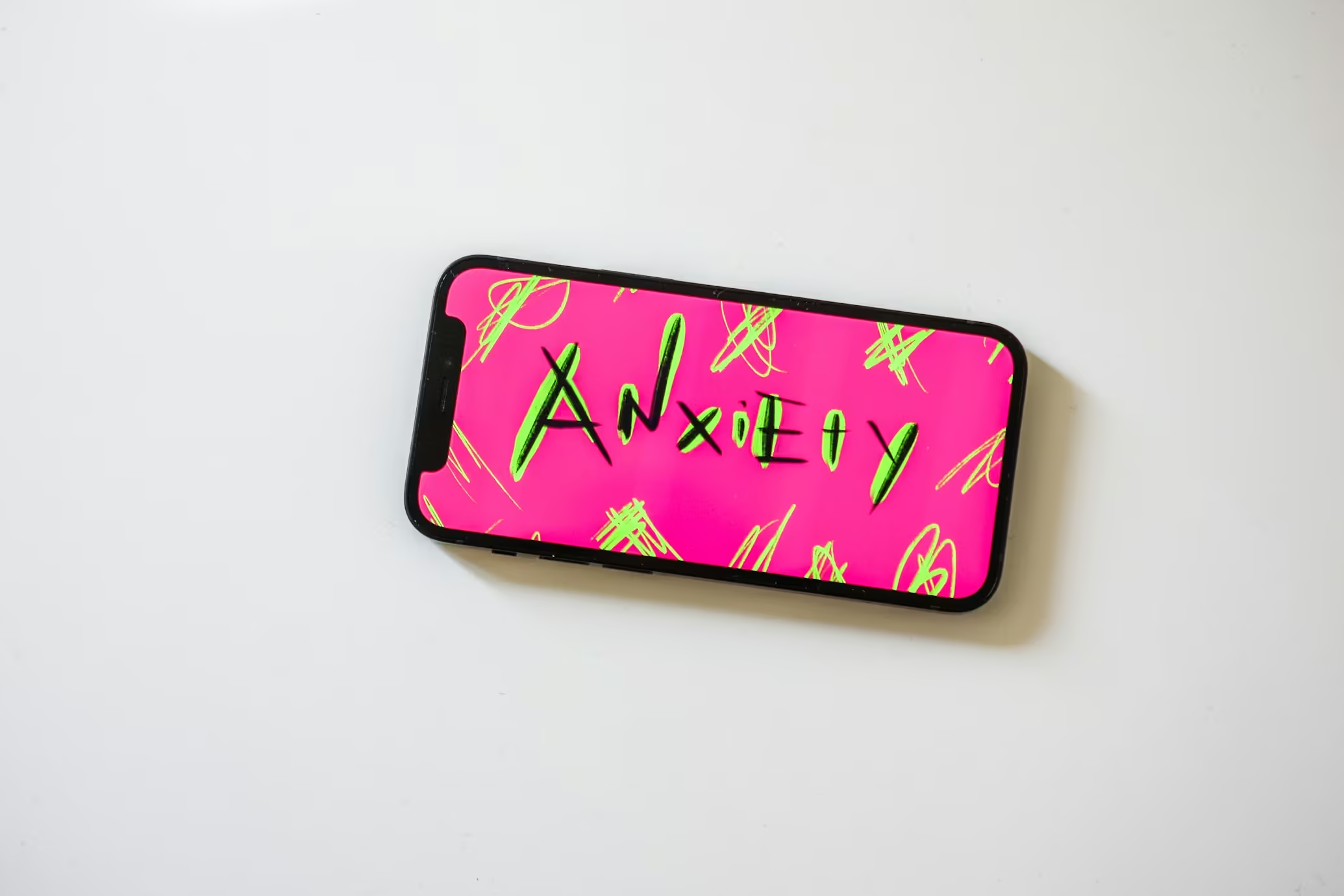
Understanding anxiety has become one of the most important psychological challenges of our time. It shows up as a constant background tension, sudden waves of fear, or racing thoughts before sleep. Many people experience anxiety not as a single event, but as a persistent state of being.
It is often described as a disorder, but when we look closely at how the human brain and nervous system actually work, a different understanding emerges. Anxiety is not a mistake. It is a survival system that has become overactivated.
To reclaim our minds, we must stop fighting anxiety and start understanding it. Anxiety lives in the body before it appears in thought. It is shaped by biology, relationships, and learned patterns of protection. When we understand this anatomy, we gain the power to step out of the endless loop of worry.
The Biological Alarm System
Understanding anxiety requires realizing that it begins in the nervous system, not in logic. Long before the thinking brain gets involved, the body decides whether it is safe or in danger.
The Threat Detector and the Observer
The human brain has a built-in threat detection system whose sole purpose is survival. For a clinical overview, the National Institute of Mental Health (NIMH) explains how these disorders manifest biologically. When this system senses danger, it activates stress hormones and prepares the body to fight, flee, or freeze.
At the same time, the brain has another system responsible for observation. In anxiety, this balance breaks down. The threat detector becomes hypersensitive, while the observing system loses influence.
The Autonomic Nervous System and Anxiety
The autonomic nervous system controls our stress responses. When anxiety dominates, the body remains stuck in a state designed for emergency action. True recovery does not start with controlling thoughts. It starts with teaching the nervous system that safety is possible again through regulating practices like Yoga.
The Role of the Threat System
The human brain evolved to keep us alive, not to keep us comfortable. Anxiety is the result of this system working too well.
However, anxiety grows when this system is not balanced by the body’s calming mechanisms. Without regular signals of safety, connection, and rest, the alarm never fully shuts off. For those suffering from chronic stress or burnout, specialized programs at Vishalya Wellness help reset these physiological baselines.
Anxiety and the Fear of Disconnection
Humans are social beings. Many forms of anxiety are rooted in fear of abandonment or rejection. When relationships feel uncertain, the body reacts with panic. The nervous system seeks reassurance through closeness. When reassurance is unavailable, anxiety fills the gap.
The Psychological Loop of Worry
While anxiety begins in the body, it is sustained by the mind.
The Voice That Never Stops
Most people have an internal voice that narrates everything. In anxiety, this voice becomes louder. It believes that worrying is a form of protection. This voice tries to control the future by imagining every possible problem, a cycle often discussed in our guide on reclaiming agency.
Anxiety and the Modern Environment
The human nervous system evolved in natural environments. Modern life provides the opposite. Constant noise and screen exposure keep the nervous system in alarm. Disconnection from natural green spaces removes one of the nervous system’s most powerful regulators.
How to Reclaim the Mind: 5 Steps
Anxiety cannot be defeated through force. It must be met through regulation.
Step 1: Regulate the Body First
When anxiety rises, calm the nervous system first. Slow breathing signals safety to the body. Naming the state, such as “my body is activated,” separates sensation from fear.
Step 2: Observe the Mind Without Obeying It
You do not need to stop anxious thoughts. You need to stop believing them automatically. Awareness creates distance. Distance creates choice.
Step 3: Build the Soothing System
Warm self-talk and compassionate imagery activate calming systems. Shame fuels anxiety; compassion dissolves it.
Step 4: Restore Environmental Balance
Time in natural spaces and periods of stillness allow the nervous system to reset. Nature does not demand attention. It allows attention to rest.
Step 5: Reconnect
Anxiety thrives in isolation. Reaching out to trusted people or professional support like Vaishalya Healing counseling is not a sign of dependence; it is a sign of nervous system health.
Conclusion: From Protection to Living
Anxiety is not your enemy. It is a protective system that has lost balance. Freedom comes not from eliminating anxiety, but from understanding anxiety.
When you recognize anxiety as a bodily signal rather than a command, its grip loosens. When safety is restored, the mind no longer needs to shout. And in that quiet, life becomes something you participate in again.
About Asha Bhupender Charitable Trust
Asha Bhupender Charitable Trust works to create awareness and support around mental health. Our approach recognises that anxiety is not a personal failure, but a human response.


For support, contact info@ashabhupendertrust.org or 7018148449.