The Ultimate Dyslexia Guide for Parents: From Confusion to Confidence

Table of Contents
- Part 1: Understanding Dyslexia Clearly
- Part 2: Recognizing Dyslexia Across Development
- Part 3: Diagnosis as a Turning Point
- Part 4: Effective Treatment Approaches
- Part 5: The Parent’s Role at Home
- Part 6: Accommodations Are Essential
- Part 7: Protecting Emotional Well-Being
- Part 8: Dyslexia Beyond School
- Part 9: A Practical Action Plan for Parents
Imagine your bright, articulate child, the one who loves stories, builds complex Lego structures, and explains how engines work, suddenly shrinking into themselves when asked to read a simple sentence. You see the frustration in their eyes, the avoidance when a book appears, and the tears over homework that should take twenty minutes but stretches into hours.
As a parent, confusion quickly turns into anxiety. You may question yourself. Is it something I did wrong? Are they not trying hard enough? Is their intelligence the issue?
The truth is clear and reassuring: Dyslexia is not a failure of intelligence, effort, or parenting.
This comprehensive dyslexia guide for parents is designed to take you from uncertainty to clarity, and from worry to confidence. By the end, you will understand what dyslexia truly is, why it happens, how to identify it early, and how to become your child’s strongest advocate. Dyslexia is not a tragedy. It is a different neurological pathway that requires a different educational approach.
Part 1: Understanding Dyslexia Clearly
What Dyslexia Really Is
Dyslexia is an unexpected difficulty in learning to read in an individual who has the intelligence, curiosity, and reasoning capacity to be a much stronger reader. It is a neurobiological learning difference, not a reflection of potential.
The defining feature of dyslexia is a specific weakness in reading accuracy and fluency that exists alongside strong thinking skills. Many children with dyslexia are verbally gifted, imaginative, mechanically inclined, or conceptually advanced. The struggle lies in how the brain processes written language, not in how the brain thinks.
What Dyslexia Is Not
- It is not a vision problem. Letters do not appear reversed because of eyesight. While letter reversals may occur, they are related to language retrieval, not visual defects.
- It is not laziness. Dyslexic children often exert far more effort than their peers just to keep pace.
- It is not low intelligence. There is no correlation between IQ and dyslexia. A child can be gifted and dyslexic at the same time.
- It is not rare. Dyslexia affects roughly one in five people, making it the most common learning difference worldwide.
The Core Difficulty Explained Simply
Reading is not natural to the human brain. Spoken language develops instinctively, but reading must be taught. To read, the brain must break spoken words into individual sounds and connect those sounds to written symbols.
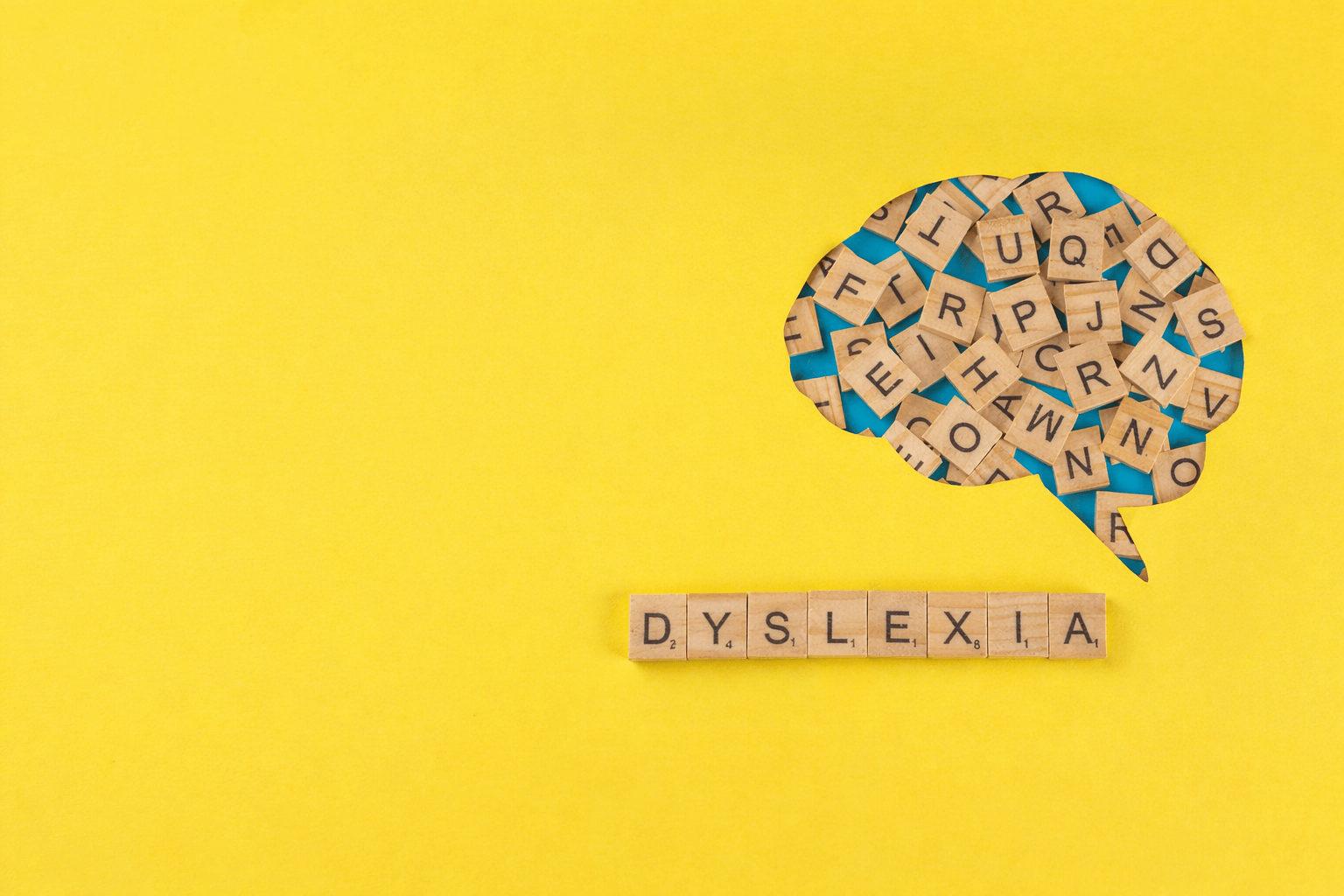
In dyslexia, this sound-processing system does not function efficiently. Words are not perceived as a sequence of sounds but as a blurred whole. When a child cannot reliably separate sounds, they cannot link them to letters. Without this link, decoding collapses, and fluent reading becomes impossible.
This single processing difficulty explains nearly all reading-related struggles in dyslexia.
The Sea of Strengths
While the reading system struggles, other brain regions responsible for reasoning, creativity, comprehension, and problem-solving often remain strong or even exceptional. This imbalance explains why dyslexic children can speak eloquently, understand complex ideas, and think deeply, yet fail basic reading tasks.
Part 2: Recognizing Dyslexia Across Development
Dyslexia is lifelong, but its signs evolve with age. According to experts at the International Dyslexia Association, early identification is the most powerful protective factor for a child’s academic and emotional future.
Preschool and Kindergarten
Early signs usually appear in spoken language before reading begins. These may include delayed speech, persistent pronunciation errors, difficulty learning rhymes, trouble retrieving familiar words, and challenges remembering letters, especially those in their own name.
These signs are often dismissed as immaturity, but they deserve attention.
Early Elementary Years
This is when dyslexia becomes visible. Children struggle to sound out simple words, read slowly and laboriously, guess words instead of decoding, and spell inconsistently. Avoidance behaviors, emotional outbursts, and physical complaints before school are common.
Upper Elementary and Middle School
As learning shifts from reading to reading-based learning, difficulties intensify. Homework becomes exhausting. Writing remains brief and simplistic despite strong ideas. Learning foreign languages becomes overwhelming. Self-esteem often begins to erode.
Adolescence and Young Adulthood
Reading remains slow and effortful. Vocabulary knowledge is often higher in spoken language than in reading. Timed exams present major barriers, not because of knowledge gaps, but because of reading speed limitations.
Part 3: Diagnosis as a Turning Point
Waiting is harmful. Dyslexia does not resolve with time, and delays widen the academic and emotional gap.
Why a Diagnosis Matters
A diagnosis replaces shame with understanding. It grants access to educational support and accommodations. Most importantly, it provides a clear roadmap for targeted intervention.
What a Proper Evaluation Includes
A meaningful assessment examines phonological processing, decoding accuracy, reading fluency, spelling, intellectual ability, vocabulary, and comprehension. The goal is not to label a child, but to explain the discrepancy between their intelligence and their reading performance.
Part 4: Effective Treatment Approaches
Standard classroom reading instruction often fails dyslexic children. They do not learn through exposure or guessing strategies.
Structured Literacy
The most effective intervention is structured, explicit, multisensory reading instruction. This approach teaches the mechanics of language in a clear, sequential manner, using sight, sound, and movement together.
Instruction must be systematic, intensive, and sustained. Progress may be gradual, but it is real and lasting.
What to Avoid
Approaches that emphasize guessing from context, memorization without phonics, or vision-based exercises do not address the core difficulty and often increase frustration.
Part 5: The Parent’s Role at Home
As outlined in this dyslexia guide for parents, families are central to long-term success. Reading aloud preserves vocabulary growth and intellectual curiosity. Repeated reading builds fluency and confidence. Rich conversation expands language exposure. Technology supports communication without penalizing spelling or speed. The goal is not perfection, but access.
Part 6: Accommodations Are Essential
Accommodations restore fairness. Extra time, quiet testing environments, audiobooks, lecture recordings, and flexible language requirements allow dyslexic students to demonstrate knowledge without being blocked by decoding speed. These supports do not reduce standards. They remove barriers.
Part 7: Protecting Emotional Well-Being
Reading drains mental energy in dyslexic children. Exhaustion is often misinterpreted as inattention or defiance. Chronic failure without explanation breeds anxiety, avoidance, and self-doubt.
Parents must actively protect self-esteem by explaining dyslexia honestly, celebrating strengths, validating effort, and ensuring success in at least one meaningful domain outside academics. If the emotional toll on the family or individual becomes heavy, utilizing specialized resources like Vaishalya Healing counseling services can offer the emotional foundation necessary for recovery.
Part 8: Dyslexia Beyond School
Dyslexia does not prevent achievement. Many adults with dyslexia excel in leadership, innovation, entrepreneurship, engineering, design, and problem-solving roles. With technology and self-awareness, reading limitations no longer define potential.
Furthermore, for adult women navigating overlapping challenges like stress, burnout, or addiction alongside learning differences, comprehensive centers like Vishalya Wellness provide holistic rehabilitation designed for long-term vitality.
Part 9: A Practical Action Plan for Parents
- Trust your instincts.
- Request evaluation early.
- Secure appropriate instruction and accommodations.
- Educate your child about dyslexia.
- Prioritize mental health.
- Use technology without guilt.
- Actively nurture your child’s strengths.
Conclusion
Dyslexia is not a broken system. It is a different operating system. When supported correctly, dyslexic children do not merely cope. They flourish.
As this dyslexia guide for parents highlights, your role is not to change who your child is, but to create conditions where their intelligence, creativity, and resilience can emerge without shame or limitation.