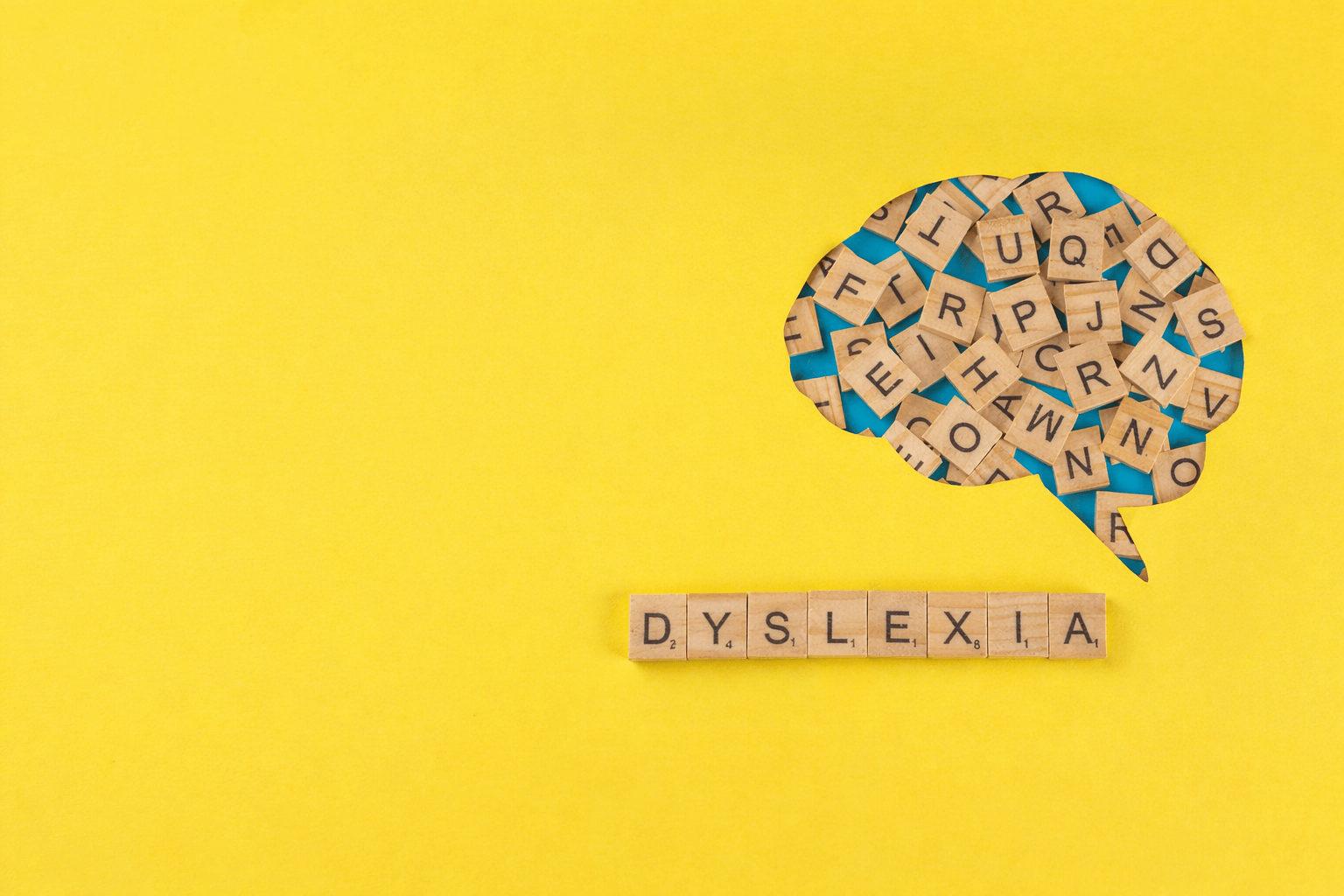
Overcoming Dyslexia: The Definitive Guide to Methods, Strategies, and Solutions

Table of Contents
- Part 1: Understanding the Enemy
- Part 2: The Gold Standard: Structured Literacy
- Part 3: The Davis Method: Correcting Perception
- Part 4: Building Fluency
- Part 5: Vocabulary and Comprehension Strategies
- Part 6: Overcoming Spelling Hurdles
- Part 7: Accommodations
- Part 8: The Role of Parents and Advocacy
- Part 9: Dyslexia in Adults
Abstract: Dyslexia is frequently misunderstood as a simple difficulty with reading. In reality, it is a complex and multifaceted neurodevelopmental condition that affects how the brain processes language and written information. While dyslexia presents real and persistent challenges, decades of scientific research are clear on one crucial point: dyslexia can be effectively addressed.
With the right interventions, structured strategies, and appropriate accommodations, the so-called "glitch" in the reading circuitry can be strengthened, bypassed, or compensated for. When this happens, the individual’s true intelligence, creativity, and reasoning abilities are finally allowed to emerge.
This guide offers a comprehensive and practical roadmap for overcoming dyslexia. It integrates neurological research, evidence-based educational methods, and perceptual training approaches. Whether you are a parent seeking clarity, an educator looking for effective tools, or an adult searching for answers, this guide brings together the full spectrum of solutions that exist in the current body of knowledge.
Part 1: Understanding the Enemy
Overcoming dyslexia begins with understanding it accurately. Dyslexia is not a sign of low intelligence, poor motivation, or lack of effort. It is formally defined as an unexpected difficulty in learning to read in individuals who possess the intelligence to be significantly better readers.
This definition is critical because it highlights the core paradox of dyslexia: a specific weakness in reading that exists alongside intact or even superior cognitive abilities.
The Core Deficits
Scientific research from organizations like the International Dyslexia Association has consistently identified the primary root of dyslexia as a weakness in the phonological module of the brain. Human language operates as a hierarchical system. Higher-level processes such as comprehension, reasoning, vocabulary, and syntax are often well-developed in dyslexic individuals. However, the foundational level, the ability to process and manipulate the smallest units of sound known as phonemes, is impaired.
This difficulty makes it hard to break spoken words into their individual sound components and then map those sounds onto written letters. When the brain cannot process phonemes efficiently, the neural pathways required for fluent reading fail to develop automatically.
Neuroimaging studies demonstrate this clearly. Skilled readers rely on efficient posterior brain regions, particularly the occipito-temporal area, which allows for rapid, automatic word recognition. Dyslexic readers, by contrast, rely on slower frontal and right-hemisphere pathways. The result is reading that may be accurate but remains effortful, slow, and mentally exhausting.
The Alternative View: Disorientation and Picture Thinking
Another influential perspective, developed by Ronald Davis, approaches dyslexia not as a disorder but as a byproduct of picture-based thinking. According to this view, many dyslexic individuals are nonverbal thinkers who process information through detailed, multidimensional mental images rather than sequential words.
This form of thinking is extremely fast and often linked to creativity and innovation. However, problems arise when the individual encounters abstract "trigger words" such as the, and, or of. Because these words lack a clear mental image, the brain enters a state of disorientation while attempting to resolve the confusion. This disorientation can distort perception, causing letters to appear to flip, blur, or move.
Although the phonological and disorientation models differ in explanation, both agree on one fundamental truth: standard teaching methods frequently fail dyslexic learners. Effective support requires targeted, specialized intervention.
Part 2: The Gold Standard: Structured Literacy and Phonics
The strongest scientific consensus for treating dyslexia centers on Structured Literacy, most commonly delivered through approaches derived from Orton-Gillingham principles. Structured Literacy is explicit, systematic, and multisensory by design.
1. Phonological Awareness Training
Reading cannot develop without an understanding that words are composed of sounds. Phonological awareness forms the foundation of literacy.
- Rhyme Recognition: Teaching children to identify words that share similar ending sounds, such as cat, bat, and sat.
- Segmentation: Training students to break words into individual phonemes. For example, understanding that bat consists of three sounds: /b/ /a/ /t/.
- Hands-on Activities: Using coins or counters to represent sounds, pushing one forward for each phoneme heard in a word.
2. Systematic Phonics
Dyslexic learners cannot rely on guessing words from context or pictures. They must be taught the structure of written language directly.
- Explicit Instruction: Letter-sound relationships are taught clearly and deliberately.
- Logical Sequence: Instruction progresses from simple sound patterns to more complex spelling rules.
- Blending Practice: Students are taught to smoothly combine sounds to form words, such as blending f-uuu-n into fun.
3. Multisensory Learning
Because the auditory pathway is often weak, effective instruction reinforces learning through multiple sensory channels.
- Tactile and Kinesthetic Input: Writing letters in sand, rice, or textured materials while speaking the sound aloud.
- Visual and Auditory Integration: Seeing the letter, saying the sound, and writing it at the same time to reinforce neural connections.
Proven Programs Using These Principles Include:
- Wilson Reading System
- Barton Reading and Spelling
- Lindamood-Bell (LiPS)
- READ 180
Part 3: The Davis Method: Correcting Perception
For individuals who resonate with the disorientation model, the Davis Method provides tools aimed at stabilizing perception.
1. Orientation Counseling
The first goal is to eliminate perceptual disorientation by identifying the internal "mind’s eye."
- Technique: The learner is trained to mentally position their perceptual viewpoint at a stable location slightly above and behind the head.
- Outcome: Once oriented, perceptual distortions cease, allowing text and surroundings to appear stable and consistent.
2. Symbol Mastery
Memorizing definitions is ineffective for picture thinkers. Instead, abstract words must be fully conceptualized.
- Clay Modeling: Learners physically model the meaning of abstract words using clay, alongside shaping the letters themselves.
- Result: Creating a concrete representation eliminates the mental blank that previously triggered disorientation. Over 200 high-frequency trigger words are typically addressed in this way.
Part 4: Building Fluency: The Bridge to Meaning
Accuracy alone is insufficient. Without fluency, comprehension collapses. Fluency enables reading to become automatic rather than labor-intensive.
1. Repeated Oral Reading
This is the most effective fluency-building technique.
- The student reads the same passage aloud multiple times.
- Repetition strengthens neural pathways and shifts words from conscious decoding to automatic recognition.
- Paired Reading allows modeling and guided practice before independent reading.
2. Guided Oral Reading
Reading aloud with immediate feedback prevents errors from becoming ingrained and promotes active engagement.
3. Audiobooks and "Reading with the Ears"
Audiobooks and text-to-speech technology allow dyslexic individuals to access age-appropriate language, vocabulary, and knowledge without being limited by decoding speed.
Part 5: Vocabulary and Comprehension Strategies
Because decoding consumes mental energy, dyslexic learners often struggle with comprehension despite strong reasoning skills.
1. Explicit Vocabulary Instruction
- Teaching word roots, prefixes, and suffixes builds decoding efficiency.
- Visual semantic maps help connect new words to existing knowledge.
2. Active Reading Strategies
- Visualization and "mind movies" harness natural visual strengths.
- K-W-L charts and graphic organizers structure information in accessible formats.
Part 6: Overcoming Dyslexia, Spelling, and Writing Hurdles
Writing imposes a dual demand: generating ideas while managing spelling and transcription.
Spelling Strategies
- Teaching spelling rules and patterns instead of rote memorization.
- Using color-coding and mnemonics to reinforce structure.
Writing Solutions
- Separating idea generation from mechanics using dictation tools.
- Employing graphic organizers to support structure and clarity.
- Evaluating content separately from spelling to preserve confidence.
Part 7: Accommodations: Leveling the Playing Field
Accommodations restore time and access; they do not confer advantage.
- Extra time on tests
- Quiet testing environments
- Assistive technology
- Foreign language substitutions where appropriate
Part 8: The Role of Parents and Advocacy
Parents play a central role in ensuring early identification, proper diagnosis, and emotional protection. Understanding everything parents need to know about dyslexia is the first step in building a resilient home environment.
- Trust concerns early.
- Seek specific diagnoses.
- Preserve self-esteem by highlighting strengths and talents.
If the emotional toll on the family or individual becomes heavy, utilizing specialized platforms like Vaishalya Healing counseling services can provide essential guidance and therapeutic support.
Part 9: Dyslexia in Adults and the Workplace
Dyslexia is lifelong, but mastery is achievable.
Adults often thrive in roles that require:
- Big-picture thinking
- Creativity
- Problem-solving
- Empathy
Technology, task restructuring, and accommodations enable success. For adult women who face overlapping challenges such as burnout, stress, or addiction alongside learning differences, upcoming holistic centers like Vaishalya Wellness offer comprehensive rehabilitation and recovery support.
Conclusion: The Gift of Mastery
Dyslexia represents a paradox: a specific weakness in decoding surrounded by exceptional strengths in reasoning and creativity. Overcoming dyslexia does not mean erasing it. It means mastering written language through evidence-based instruction, adaptive strategies, and intelligent use of technology.
When properly supported, the dyslexic mind is not limited; it is uniquely capable of excellence.